
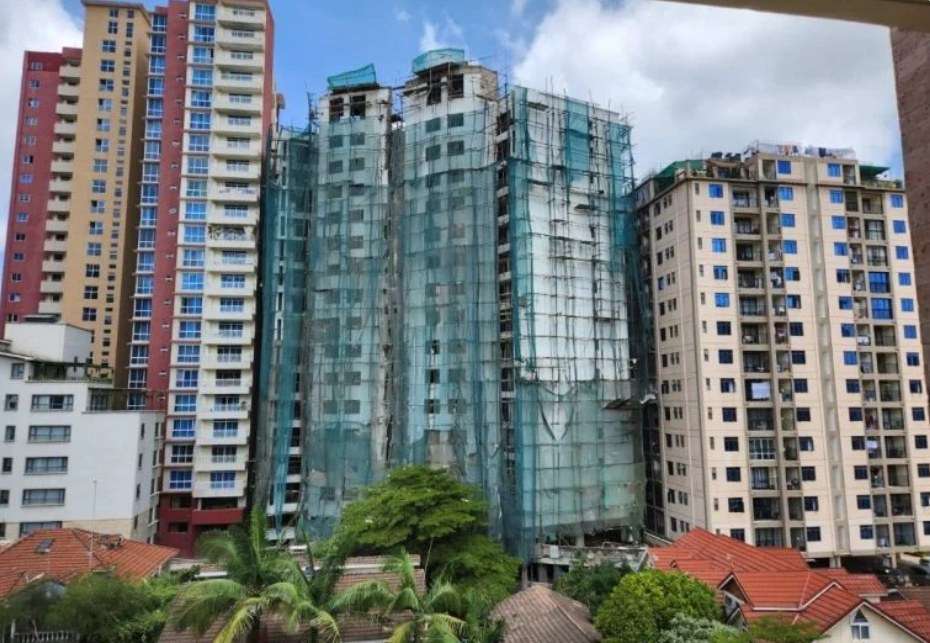
Can Nairobi finally bring order to city planning?
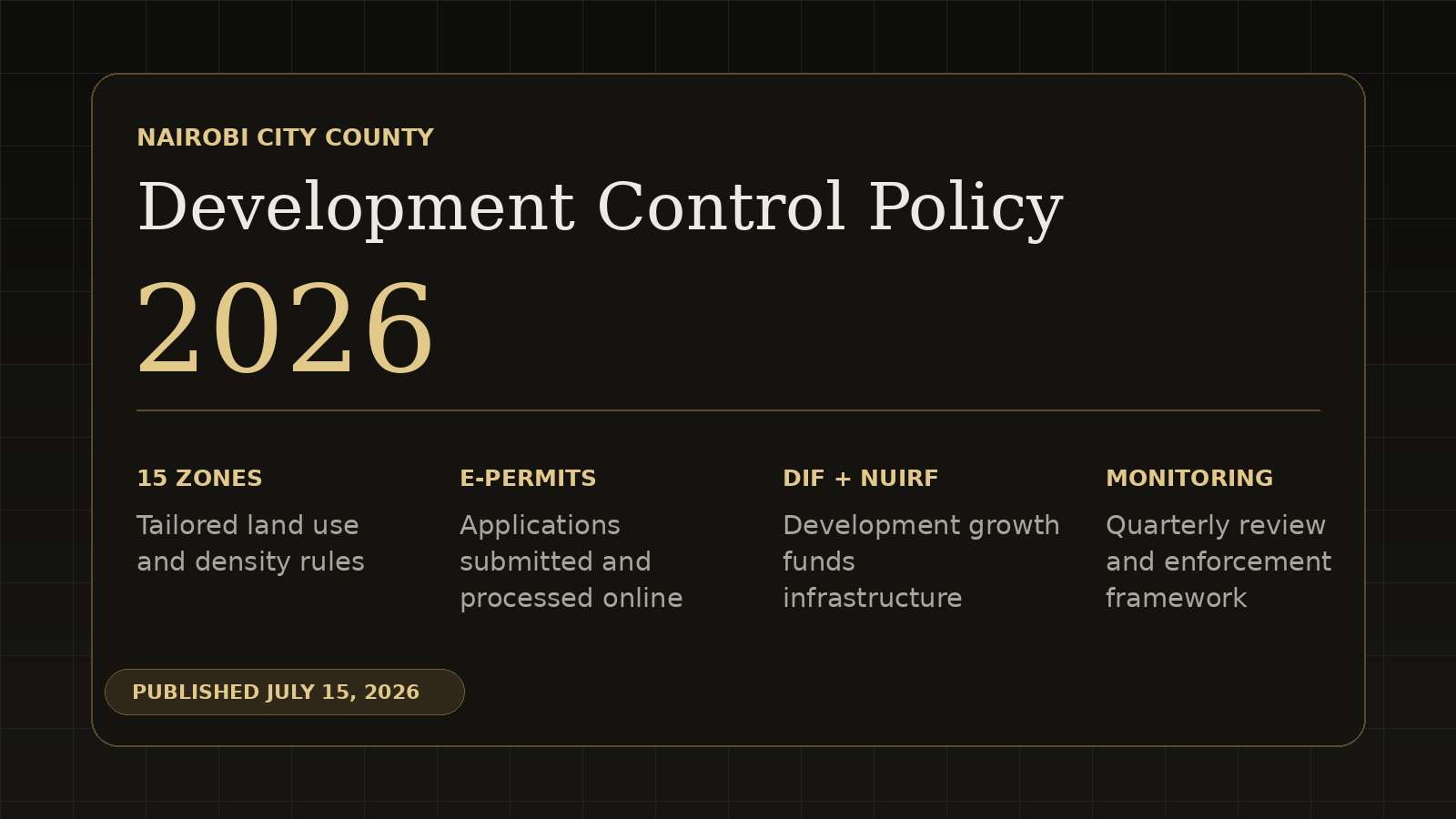
Nairobi’s new 2026 Development Control Policy introduces clearer zoning, infrastructure funding, digital permits and a stronger enforcement framework. The plan is promising. The test is whether the county can implement it consistently.
The plan looks good. Enforcement will decide whether it works.
Nairobi has been developing faster than its planning systems and infrastructure.
The policy openly acknowledges outdated 2006 guidelines, discretionary approvals, infrastructure strain and weak enforcement. It creates a better framework for zoning, applications, infrastructure finance and monitoring.
Use the tabs to see what the policy actually changes.
Fifteen development-control zones replace the previous twenty.
- Each zone receives tailored land-use and density guidelines.
- The property matrix sets parameters including permissible uses, plot ratios, ground coverage, minimum plot sizes, setbacks and building heights.
- Special Planning Areas can be designated for priority locations such as informal settlements, industrial hubs and heritage areas.
- Transit-oriented development is promoted along BRT and commuter-rail corridors.
- Public land, open spaces and riparian reserves are to receive stricter protection and monitoring.
Will the official zone maps and property matrix become easy for the public to search by parcel, rather than remaining difficult technical documents?
New development is supposed to help fund the infrastructure it places under pressure.
- The policy creates a mandatory, one-time Development Impact Fee at the building-permit stage. The policy specifically describes the DIF as a fee, not a tax.
- The proposed formula uses gross floor area, use class and location, with higher charges possible in congested areas.
- DIF revenue is intended to be ring-fenced in the Nairobi Urban Infrastructure Reinvestment Fund.
- The policy calls for a public digital portal showing collections and funded infrastructure projects.
- It also addresses road widening, water and sewer expansion, infrastructure damaged during construction and occupation certificates after restoration.
Will the money be visibly reinvested in the same neighborhoods carrying the development pressure?
Applications are supposed to move through an e-development permit system.
- All development applications are to be submitted and processed electronically.
- Nairobi’s current NPDMS supports online applications, milestone notifications, GIS functions, progress tracking and tamper-proof QR codes on permits and approved plans.
- The policy calls for an integrated digital process intended to reduce negotiation and manual discretion.
- A comprehensive planning by-law is proposed within eighteen months, including offences, penalties, stop orders and enforcement procedures.
- A monitoring system is proposed within three months, with quarterly inter-agency review and data on approvals, compliance and infrastructure.
Can the county consistently inspect and enforce the approved rules after the permit is issued?
More money and attention for infrastructure.
The development-fee framework could connect construction growth to roads, drainage, water and sewer investment. The public portal and ring-fenced fund are especially important if implemented as written.
Digital records and permit tracking.
Online submissions, progress tracking, QR-coded approvals and fewer manual decisions could improve transparency and accountability. Technology helps only if the records are complete and the rules are followed.
How the market responds.
Approval time, development costs, land values, neighborhood density, new-project pricing and whether infrastructure improves where development is concentrated.
Oak Rise is now on our shortlist.


Strong location and a developer we view as more dependable.
Diplomat demonstrated the strength of the Upper Westlands location play, but the units we preferred are largely sold. Several remaining positions may face future obstruction. That leaves Hephe Palace and Oak Rise among our current leading considerations in this pocket.
Oak Rise is materially more expensive than Diplomat’s early pricing. That is not proof that every Nairobi property is appreciating, but it is another indication that new-launch pricing in strong Westlands locations is moving higher.

Compare Oak Rise layouts before choosing a floor or stack.
The exact apartment matters. Floor, block, stack, outlook and price can make two units with the same bedroom count perform very differently.
45 sqm
Treat it more like an upgraded studio than a conventional one-bedroom.
We are building Almasi Insider to answer the questions the market cannot currently answer well.

We can see the supply. Measuring the demand is harder.
People see cranes, new launches and large apartment buildings, then conclude that Nairobi is oversupplied. That may be true for a specific neighborhood, unit type or completion period, but visible construction is only the supply side of the equation.
The harder question is demand: occupied nights, vacancy, achieved rent, tenant depth, booking activity and how many similar units will compete at the same time.
Better indications of vacancy and actual performance.
We are testing signals such as calendar compression, review growth, recent review frequency, price resilience and visible competition. None of these is a perfect vacancy rate by itself.
As the evidence improves, the goal is to estimate short-term rental demand and return assumptions more accurately, while clearly separating asking rates from achieved performance.
Observed one-bedroom nightly asking rates
The public-ad sample is premium-skewed. It is useful as an early observation, not a market conclusion.
Introducing the Almasi Unit Picker.

Too many disconnected documents.
Buyers receive a brochure, floor plans, a price list and an availability sheet, often with different names and dates.
The project is not the unit.
Floor, stack, orientation, view, layout and surrounding buildings can change the value of the exact apartment.
Put the choice in one place.
See availability, compare units, review pricing and payment dates, then request the exact apartment selected.
Our values guide how we represent buyers.
Almasi helps international buyers compare developments, choose the right unit, coordinate independent legal due diligence, negotiate the transaction and stay supported through construction and handover.